Introduction
Based on this assignment, we have selected some children between the ages of 4 and 6 to play a game. But we focused on one of our 6-year-old girls. The girl's background is that she is from Kuching and was born in a Kuching hospital. The job of his mother and father is to sell and feed.

 Observation:
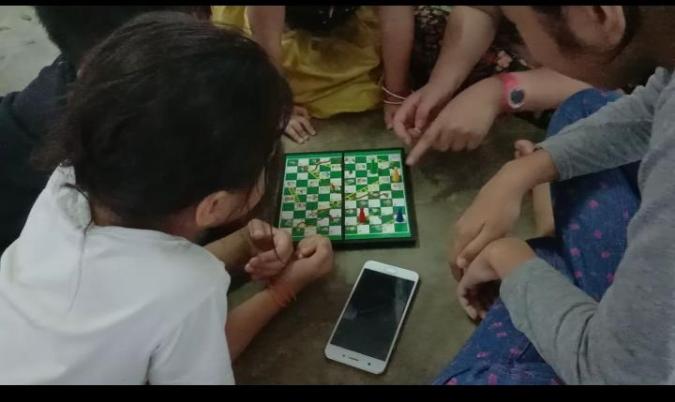
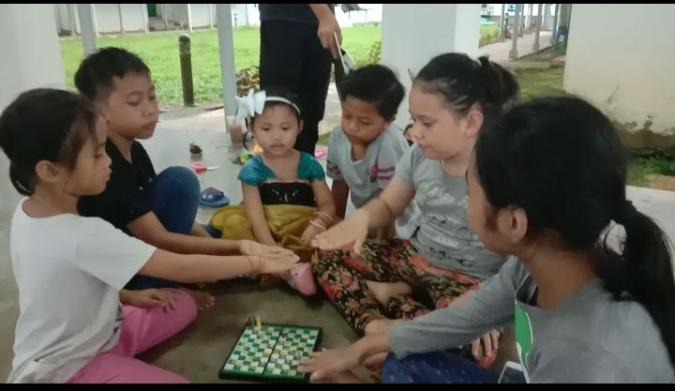
To carry out this task we have done an activity for the children namely snake and ladders. The game depends on their fate which is based on the dice. This is because if the dice are in good numbers they will win and vice versa. At first we told them how the rules were and they carried out the activity. our observations on these girls are based on cognitive, physical and, psychosocial. The following are the decisions that have been made based on observations.

Analysis:

Cognitive
 A kid is very easy to play. However, there is also some confusion that he has experienced with the game. This is because they are confused when there are many obstacles in the game. For example, when they are exposed to a number of snakes, they have to decline and so when they have several with a ladder they need to go to a higher number. So when things go up and down, kid A gets confused about where he is. There was also a misunderstanding with the numbers in the game that caused him to misplace it.

Physical

a.) Gross motor skill: Gross motor skill means the need for full body movement and the use of large muscles used to perform daily activities. For gross motor skills, this game does not involve such skills as jumping or running.

b.) Fine motor skills:  Fine motor skills mean the use of small muscles in the arms. In this game, it is found that these girls are more into motor skills. It's like getting your hands on the game. In this game, it focuses a lot on hand movement.

3. Psychosocial- how comfortable they are speaking and communication, their willingness to share, etc.
Based on the observations of the children who played the game they were very active and conversational. The way they convey things to their friends is very good. This is because from their relationships they are very friendly. So we can see that from a cognitive development point of view. If children look at them nowadays they often make older people a guide for them. It is because they learn something from their visions and their surroundings. For example, they can play the game well because they get guidance from older friends. It can be seen in the way they play games.

Next, look at their willingness to share the game. From there it can be seen that their way of thinking is very good because they have a way of competing with their peers. As such, it greatly affects the way they think and act. For example, if you look at psychosocial. They are so active and have a strong soul to compete with their peers. Therefore, in everything they do they do not want to lose and always want to win in everything.

Also, children ages 3 to 6 was enjoyed playing something that makes them happy. So they like to share ways to play as well as they like to negotiate and for that, they can make any decisions in the game. For example, they learn to use symbols in writing and reading. It is because when they learn something they can remember always. They also like to show understanding based on their experience. They are also beginning to understand the direction in each activity as they begin to think. And most notably, they show a cooperative attitude for example by waiting for their turn to play and not to act as if they were playing very happy and not bored. From that, we can understand that the children are happy when they play something.

Therefore, play is also very important in developing children's personal and social interpersonal skills. So through it, we can identify the problems children face at that age. For example, from there we can see their activity and interest. Adding to their age these children need considerable attention. Therefore, it is seen that some children do not enjoy interacting with the public at that level and some are less interested in playing and they prefer watching other children play. For the kids in the video, they are very active and love to support other friends.

4. Do any of the children appear to be at a stage that is significantly different from their age? Do any of them appear to be achieving the milestones at a much younger age than expected, for example, or are any of them significantly behind what you might expect?

Yes. It can be seen that the situation between them is quite significant but what is interesting is that they can to cooperate with each other. They can also give their friends ideas while playing. Looking at each stage of childhood shows a different level of maturity. For example, as they begin to grow older they are smarter, mature in each of their actions, and able to solve the problems they face. That's where they can distinguish themselves. For example, when they play children older than them they provide a lot of help and can learn how to play well.

Therefore, it is noteworthy that children who have reached 6 years of age are quite different from children 6 years old and below. This is due to environmental factors and the way they accept things within themselves. Therefore, they must have a good mentor to shape their identity so that they do not miss out on age. So the role of parents is very important in guiding the children because without the role of the parent it is clear that the children will be easily distracted and have no mature thoughts.

Reference:
Gross motor skill. (2019). Kids sense. Retrieved from https://childdevelopment.com.au/areas-of-concern/gross-motor-skills/
Fine motor skill. (2019). Kids sense. Retrieved from https://childdevelopment.com.au/areas-of-concern/fine-motor-skills/
 KMF1043 (GRP11)